Start with the life you actually live
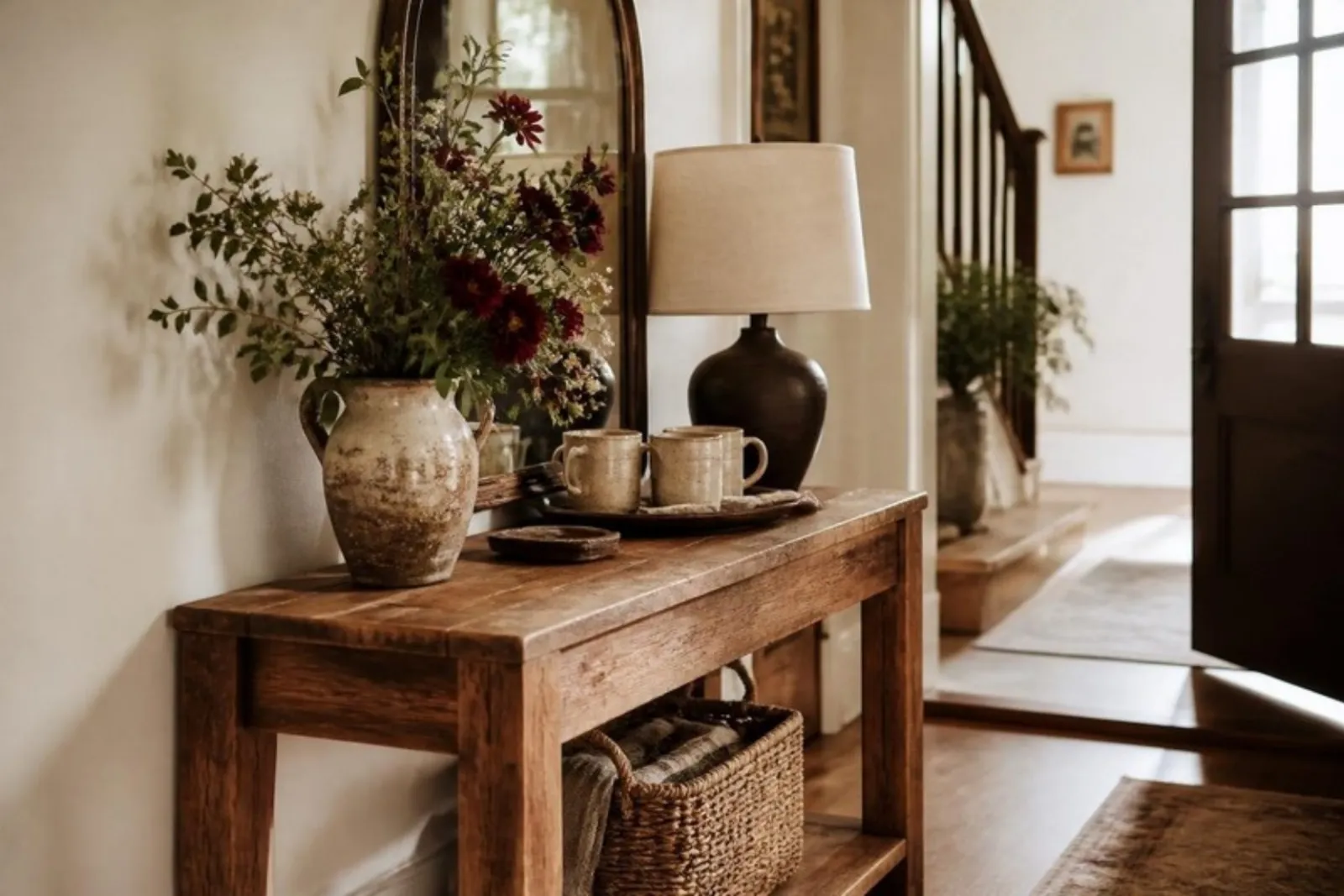
Before thinking about what a room should look like, notice what happens in it. Where does someone put down a bag? Which chair gets used first? Does a cup of tea have a place to land? These ordinary moments are a more useful starting point than a perfect photograph. A room can be beautiful and still ask too much of the people who use it.
Choose one small frustration and work from there. Move a side table closer to the sofa. Give a reading chair a light of its own. Clear the route between a doorway and the seats people prefer. These changes may not add anything new, but they can make a room feel more welcoming because the space begins to support your habits.
Build warmth through texture, not volume
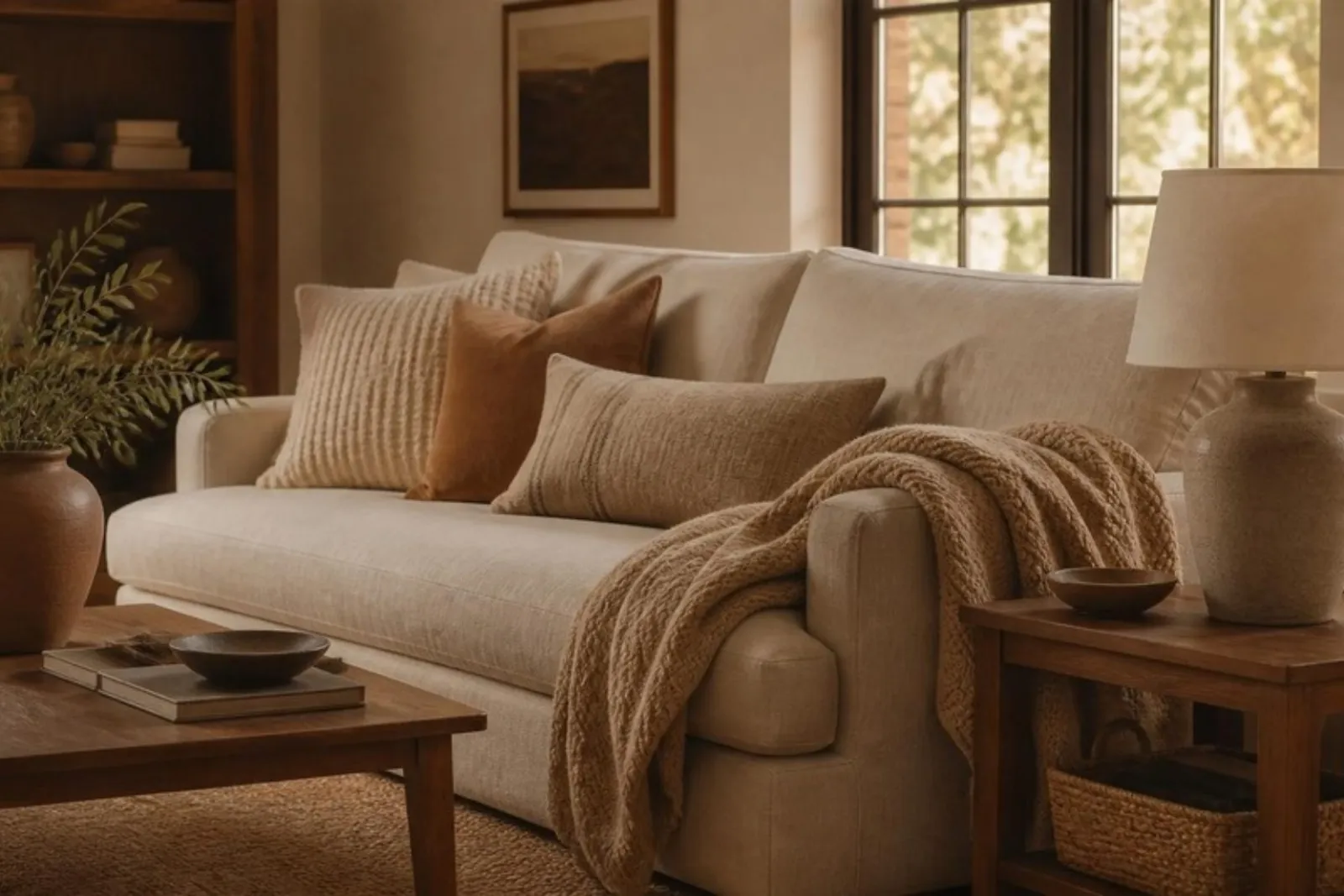
Texture brings a quiet room to life. A woven surface beside smooth wood, a linen cushion against a softly upholstered seat, or a ceramic bowl on a shelf gives the eye somewhere to pause. You do not need all of these at once. Begin with what you already own and notice which combinations feel comfortable rather than busy.
Keep an everyday palette small enough that objects can move between rooms. Warm white, soft brown, and one natural accent are a useful starting point, not a rule. If you love a brighter colour, repeat it in a few considered places. The aim is a sense of connection rather than perfect matching.
A simple layering exercise
- Choose a larger surface that feels calm: a wall, sofa, or floor.
- Add one texture that contrasts gently with it.
- Bring in an object with personal meaning rather than another purely decorative piece.
- Leave some of the surface clear so each choice has room to be noticed.
Let the light do some of the decorating
Notice how natural light changes through the day before rearranging a room around it. A chair that is lovely in the morning may feel chilly by evening. Curtains that soften direct light can also make a window feel more generous. If there is a good view, make it easy to see without moving a stack of objects first.
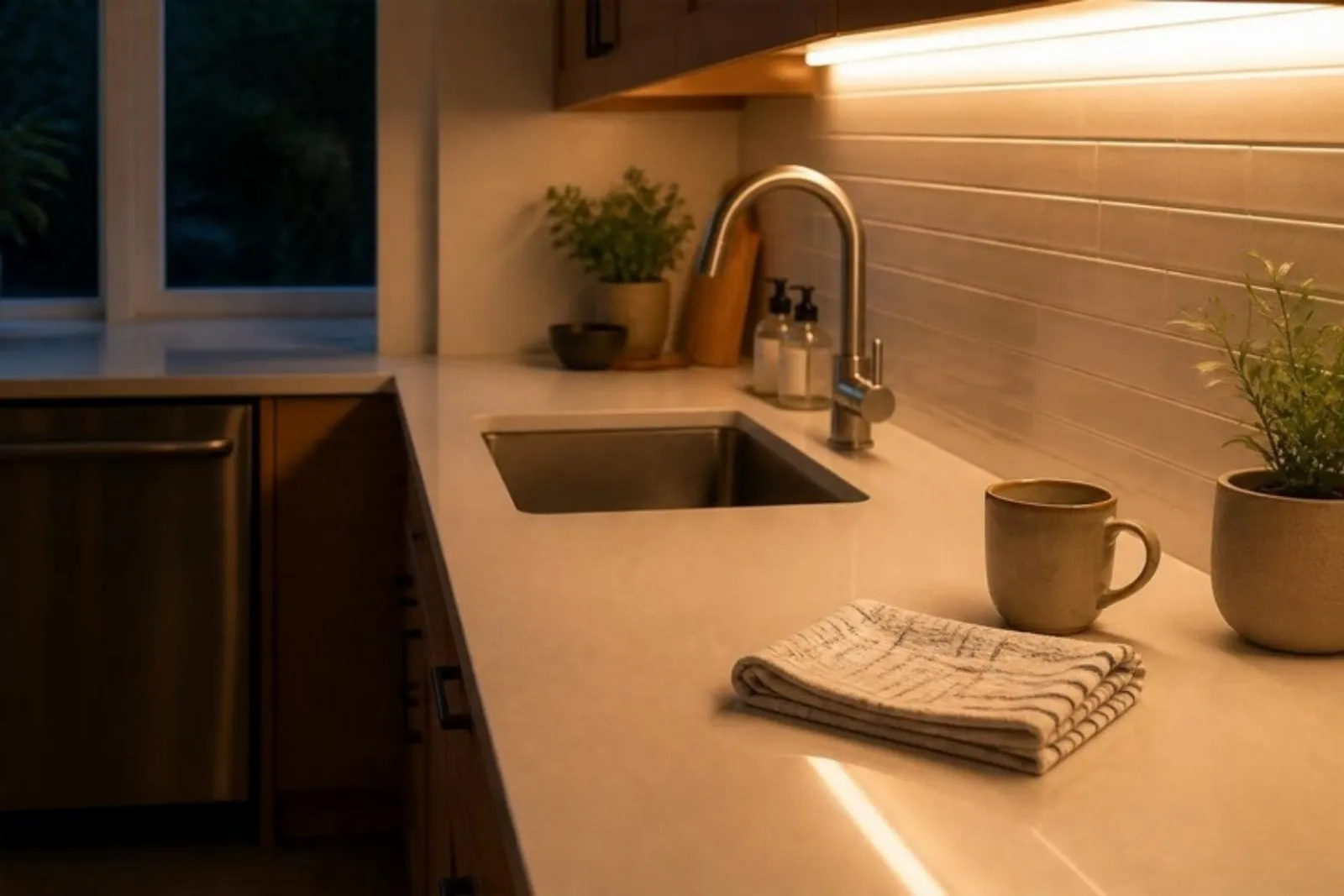
For the hours after sunset, think in layers. General lighting helps you move safely through a room; task lighting supports a particular activity; a softer lamp can make a corner inviting. Use fixtures according to their safety instructions and check that a shade and bulb are compatible. Warmth is as much about where light falls as its colour.
Make room for objects with a story
A home can become more personal when useful things are allowed to be visible. The bowl that holds fruit, a small collection of books you return to, or a picture chosen because it makes you smile can offer more character than a shelf filled for the sake of filling it. Personal does not have to mean precious or expensive.
Try gathering a few related objects, then remove one. Grouping by material, colour, or a shared purpose gives a shelf some coherence; a little clear space keeps it from becoming a display that needs constant attention. If an arrangement makes cleaning or reaching something awkward, adjust it. Living comfortably is part of the design.
Change the mood with the season
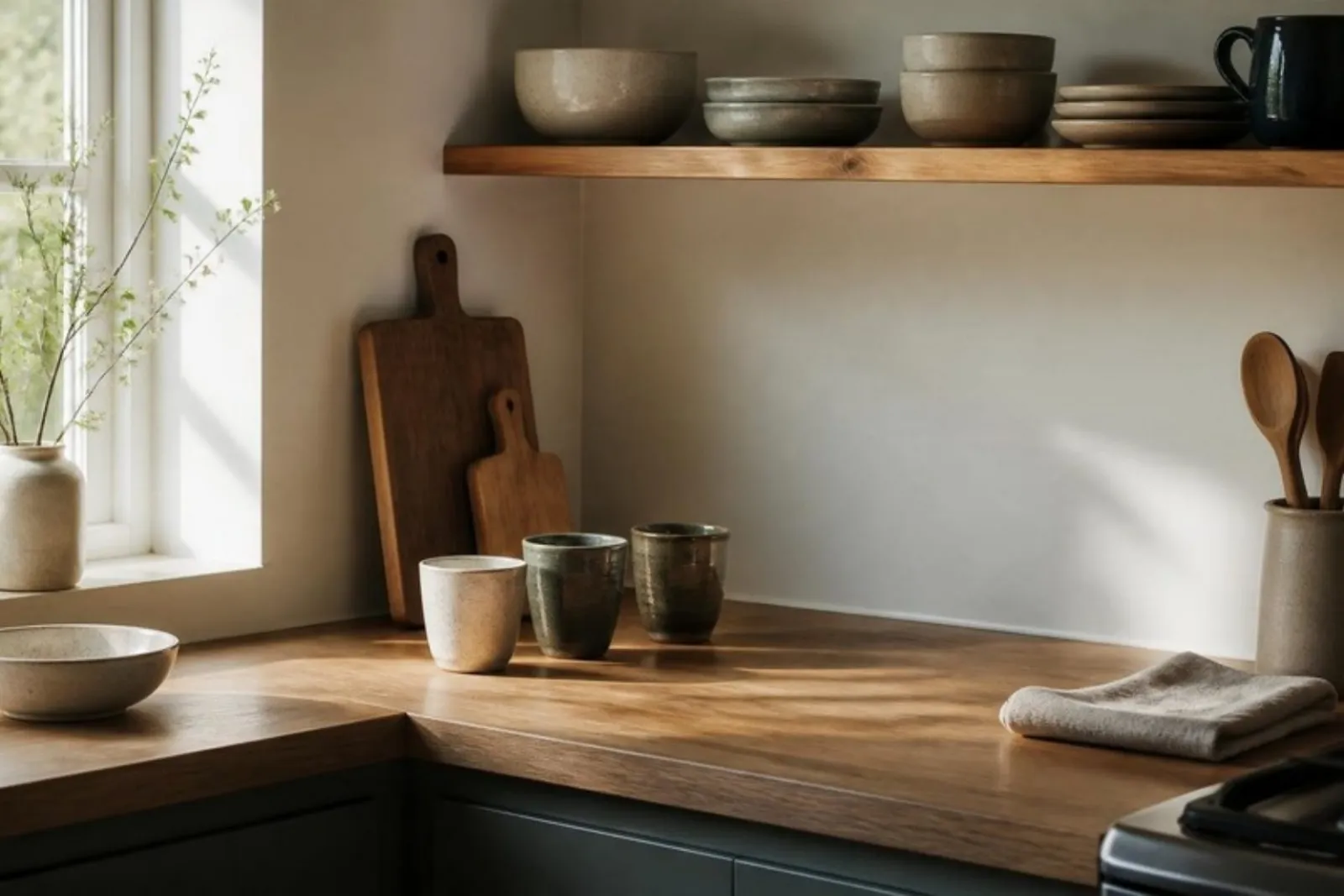
Seasonal living need not involve a box of new decorations. As the light changes, you might bring a reading chair closer to a lamp, move a blanket somewhere easy to reach, or clear a windowsill so the room catches more daylight. In warmer months, making an entrance less crowded or swapping a heavy arrangement for a single stem can be enough.
Choose changes you can reverse easily. A favourite cloth on the table, a branch from a permitted source, or a different group of books offers a small shift in mood. Be mindful of pets, children, plant suitability, and open flames when styling. The best seasonal details belong naturally to the way the household works.
Finds for a layered room
If you would like a starting point, these well-reviewed pieces follow the same ideas: soft texture, gentle light and simple storage. Measure first, and check the current listing for size, materials and care before buying.
A CONSIDERED DISCOVERY
Editor's picks for warmth and texture
 Editorial selection
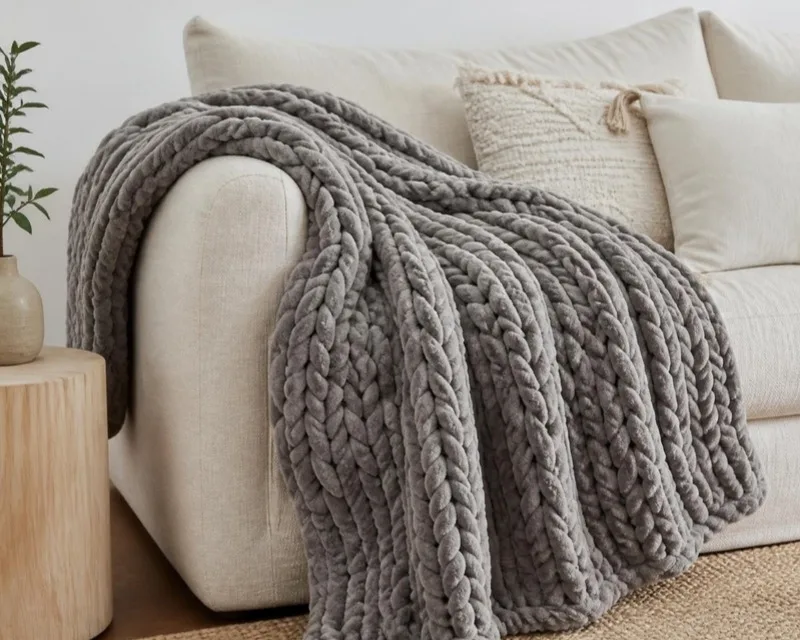
L'AGRATY Chunky Knit Throw Blanket
A hand-knit chenille throw in a chunky weave. The 60 x 80 inch size covers a sofa or the foot of a bed.
View retailer via Geniuslink ↗Read the discovery notes →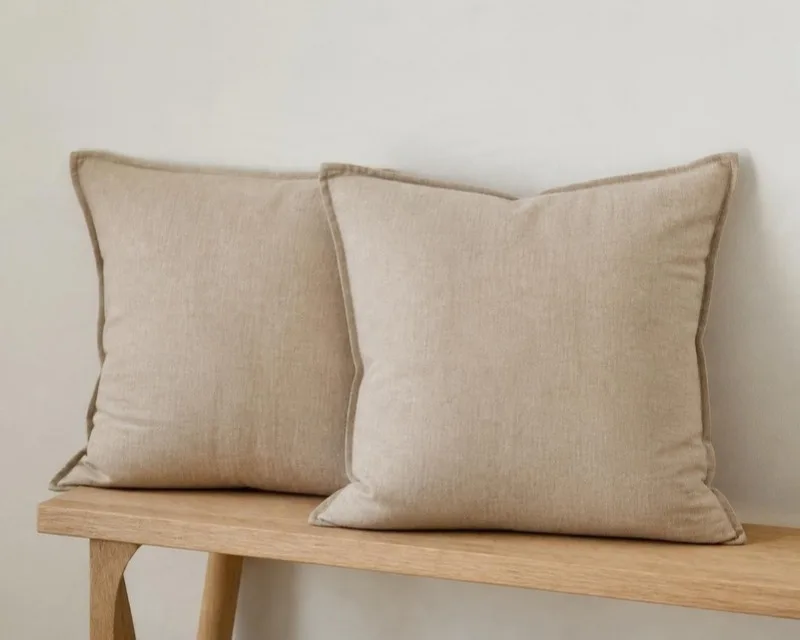 Editorial selection
MIULEE Decorative Linen Pillow Covers
Natural beige linen-blend covers with a flange edge, in an 18 x 18 inch size. An easy way to add texture to a sofa or chair.
View retailer via Geniuslink ↗Read the discovery notes →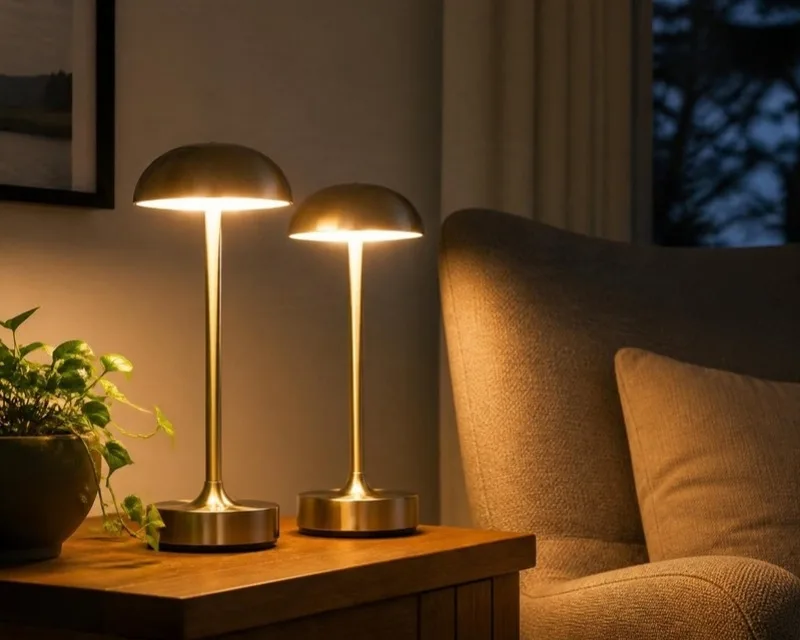 Editorial selection
YIBEN Rechargeable Cordless Table Lamp, 2 Pack
Two battery-powered metal table lamps with dimming and adjustable colour temperature. Useful where there is no outlet, such as beside a reading chair.
View retailer via Geniuslink ↗Read the discovery notes →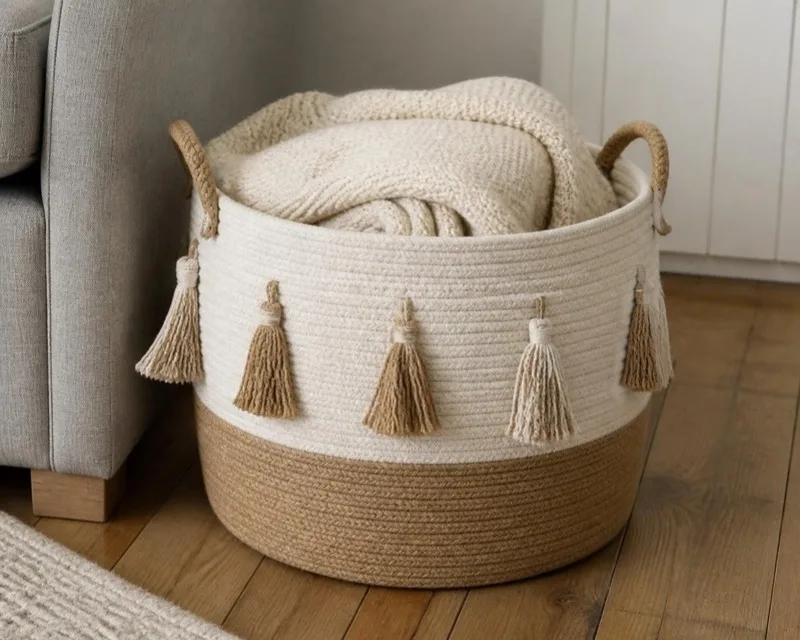 Editorial selection
Mkono Woven Storage Basket
A jute and cotton rope basket with handles, about 16 inches wide. Holds a throw, cushions or toys and looks at home in a living room.
View retailer via Geniuslink ↗Read the discovery notes →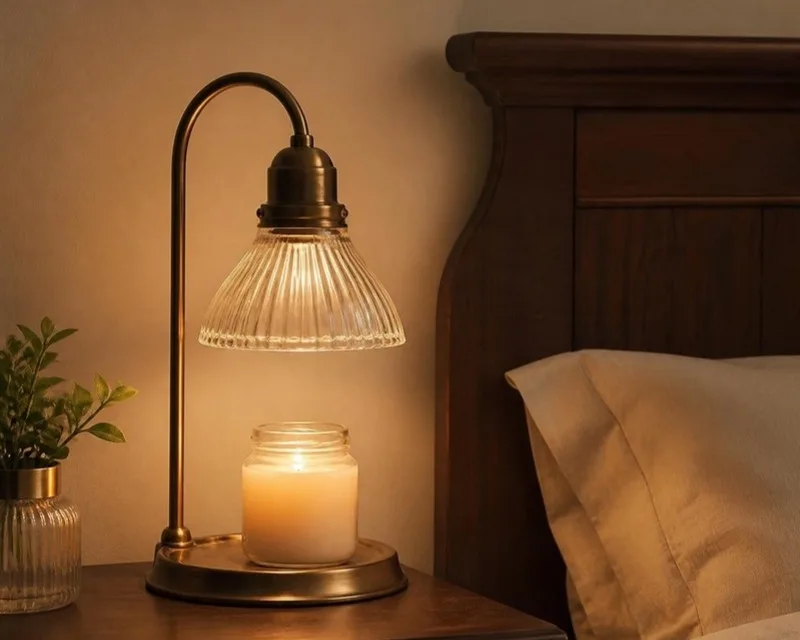 Editorial selection
seenlast Candle Warmer Lamp
A lamp that melts a jar candle from above, with a timer, a dimmer and adjustable height. Candle fragrance and a warm glow without lighting a wick.
View retailer via Geniuslink ↗Read the discovery notes →Explore our Amazon storefront
Visit our configured storefrontFiled under Home & Décor · Everyday Living · Seasonal Living
Updated