Before you begin: choose a useful finish line
A timed reset is a way to limit the task, not a promise that every kitchen can be cleaned in twenty minutes. Large households, access needs, and a busy cooking day can change what is realistic. Give yourself permission to complete only the steps that matter today. The finish line is one usable surface and an easier next meal, not a spotless room.
Gather a cloth suitable for your surfaces, a small container for items that belong elsewhere, and whatever cleaning products your household already uses safely. Follow product labels, keep chemicals away from food, and never mix cleaning agents. If washing dishes or handling waste needs longer, prioritize that rather than racing the clock.
Minutes 0–5: clear the place you use most
Pick a single landing zone: the counter where you prepare breakfast, the table where you sit, or the section beside the sink. Return food to its appropriate storage and gather unrelated items in your temporary container. Keeping the first step small prevents a reset from turning into a full decluttering project.
Make three decisions: keep here, move elsewhere, or deal with later. The last category is useful as long as it has a clear boundary. Choose a small container, not a new pile across the worktop, and return to it when time allows. Wipe the cleared area according to the surface manufacturer’s care guidance.
Minutes 5–10: bring everyday tools into reach
Notice what you reached for more than once today. A mug, a board, a lunch container, or the towel you use most often may deserve a more convenient position. Place frequently used items where they can be reached without moving something unrelated first, while keeping heavy or sharp objects in safe, suitable storage.
Avoid buying organizers at this stage. A spare tray or an existing basket can help you test a grouping before you commit to a permanent solution. Give the arrangement a few ordinary days. If it makes cleaning difficult or blocks a socket, ventilation, or appliance clearance, revise it.
| Zone | Keep nearby | Leave clear |
|---|---|---|
| Morning drinks | Everyday cups and the supplies you actually use | Safe working space around appliances |
| Meal preparation | Frequently used tools in suitable storage | A washable preparation surface |
| Coming and going | A small place for essentials that belong here | Doorways and circulation routes |
| After-meal reset | Appropriate cleaning supplies stored safely | The sink or another useful landing area |
Minutes 10–15: make one decision for tomorrow
Consider the next ordinary task. Set an empty lunch container where you will remember it, put a clean mug away within reach, or write a short note about what needs using first. Follow safe food-storage practices; do not leave food or temperature-sensitive ingredients out overnight for the sake of a styled counter.
This is also a good moment to identify something you can stop doing. If a decorative arrangement keeps moving so you can prepare food, try relocating it. If a storage rule works only when everyone remembers a complicated sequence, simplify the rule. A kitchen system is useful when the household can maintain it on a normal day.
Minutes 15–20: close the loop
Return the temporary container’s contents where you can, take appropriate waste to its usual place, and check whether the chosen surface is still clear enough to use. Leave unfinished tasks in a short, specific list rather than an open-ended instruction to organize the kitchen. “Sort one shelf” is easier to act on than “fix the cupboards.”
The end-of-reset checklist
- One everyday surface is available to use.
- Frequently used items have a sensible home.
- Food and cleaning supplies are stored safely.
- Tomorrow’s first task needs fewer small decisions.
- Anything unfinished has a clear, manageable next step.
Make the reset flexible enough to repeat
On some days, the whole routine will fit into the time available. On others, clearing the sink or putting away the items that block a doorway will be enough. Repeat the useful parts rather than treating the checklist as a test. The value comes from reducing friction, not from keeping every surface permanently empty.
Review the arrangement after a week. What returned to the same awkward place? What was easy for everyone to put away? Those observations are more useful than a rigid storage plan. Change one thing at a time so you can tell whether it helps.
Two small helpers for the reset
You do not need special equipment for a reset. If your cloths are worn out or the sink area keeps collecting clutter, these two inexpensive, well-reviewed items can make the routine quicker.
A CONSIDERED DISCOVERY
Editor's picks for a quicker reset
 Editorial selection
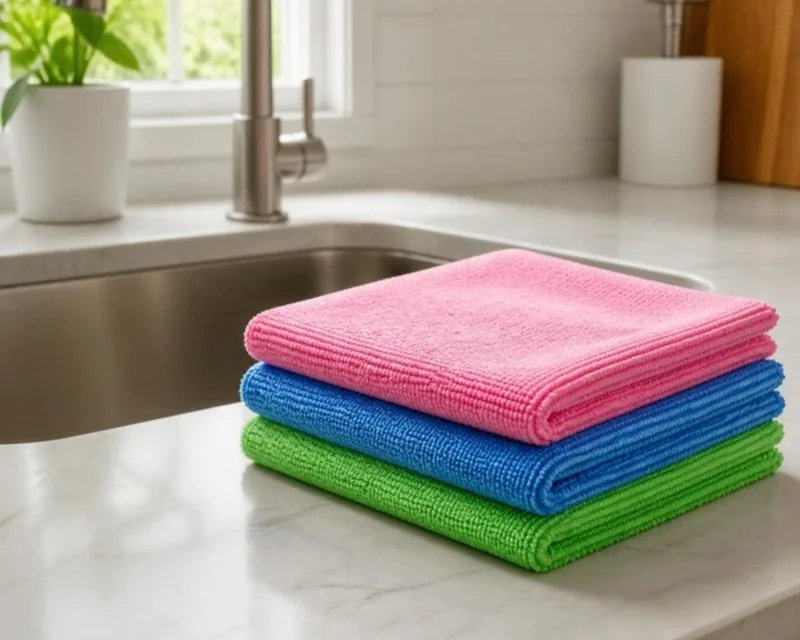
HAOBAOBEI Microfiber Cleaning Cloths, 12 Pack
Twelve 10 x 10 inch microfiber cloths in three colours, so you can keep separate cloths for dishes, counters and dusting.
View retailer via Geniuslink ↗Read the discovery notes →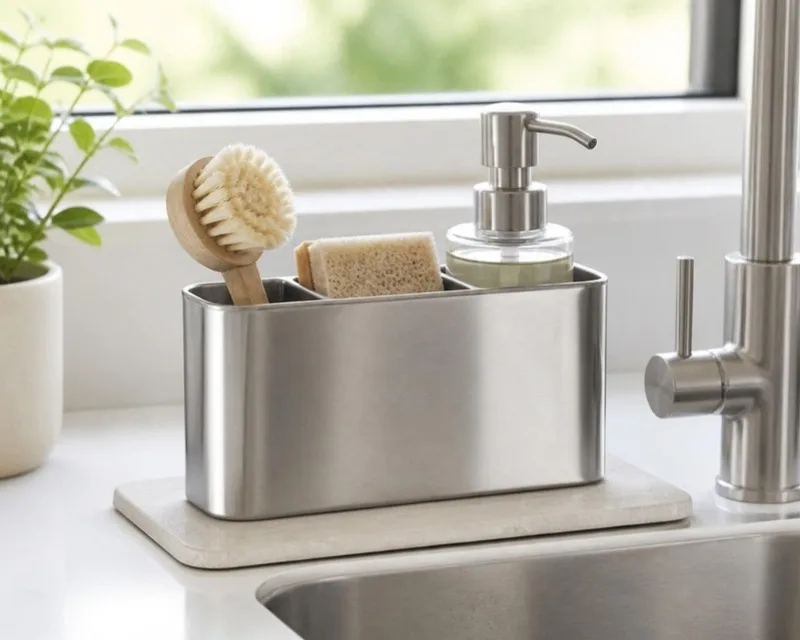 Editorial selection
Yofidra Stainless Steel Sink Caddy
A stainless steel sink caddy with three compartments for a brush, sponge and soap, sitting on an absorbent drying stone.
View retailer via Geniuslink ↗Read the discovery notes →If a storage purchase still seems useful, begin with our guide to choosing thoughtfully. ↗
Explore our Amazon storefront
Visit our configured storefrontFiled under Organization · Kitchen & Dining · Everyday Living
Updated